
Do you often have dry, burning or irritated eyes, or have you been diagnosed with Sjögren's syndrome? Then it is good to know that an eyelid surgery can affect your tear film and eye moisture. This does not mean that the procedure is not possible, but it does mean that a proper assessment beforehand is important.
Why are dry eyes relevant with an eyelid correction?
Dry eyes are a known, common side effect after an eyelid correction, with a reported incidence of 0 to over 12% [2]. On average, about a quarter of people experience dry eyes to a greater or lesser extent after an eyelid correction [1].
With an upper eyelid correction, the tear film can temporarily become less stable and inflammatory markers in the tear fluid can increase. These changes usually recover within about 6 months, but in people who already had dry eyes before the operation, the risk of persistent complaints is greater [2].
People with Sjögren’s syndrome, lupus or other auto-immune conditions naturally already have an increased risk of dry eyes, and therefore run a greater risk of permanent complaints after an eyelid correction [1].
Points of attention
- Existing dry eyes can temporarily worsen after the procedure [1,2]
- With Sjögren’s syndrome or other auto-immune conditions, extra caution is required [1]
- Changes in the blink frequency and dynamics after an upper eyelid correction can be related to dry eyes [3]
- Hormonal changes (for example due to the menopause or hormonal contraception) can further increase the risk [1]
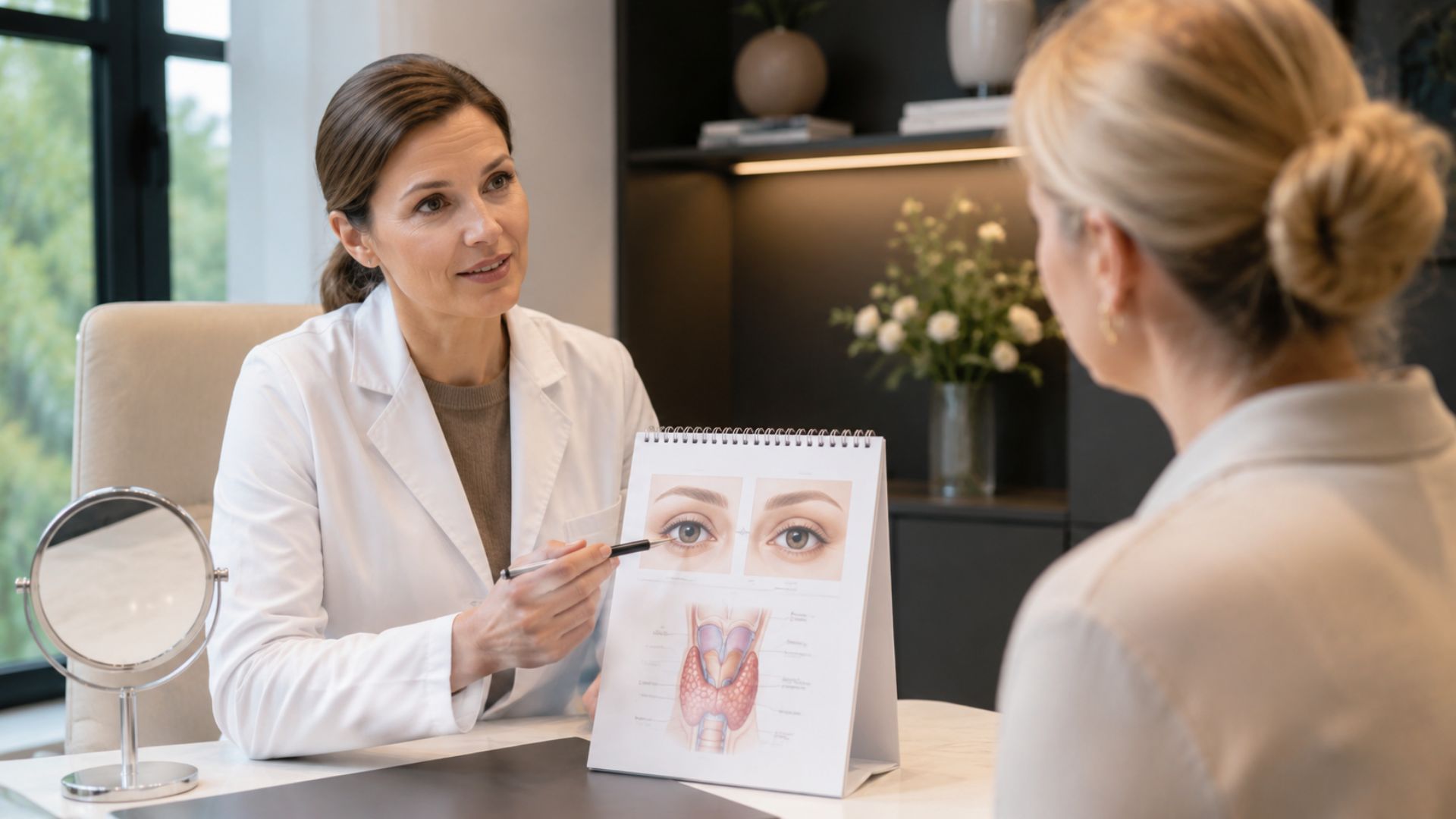
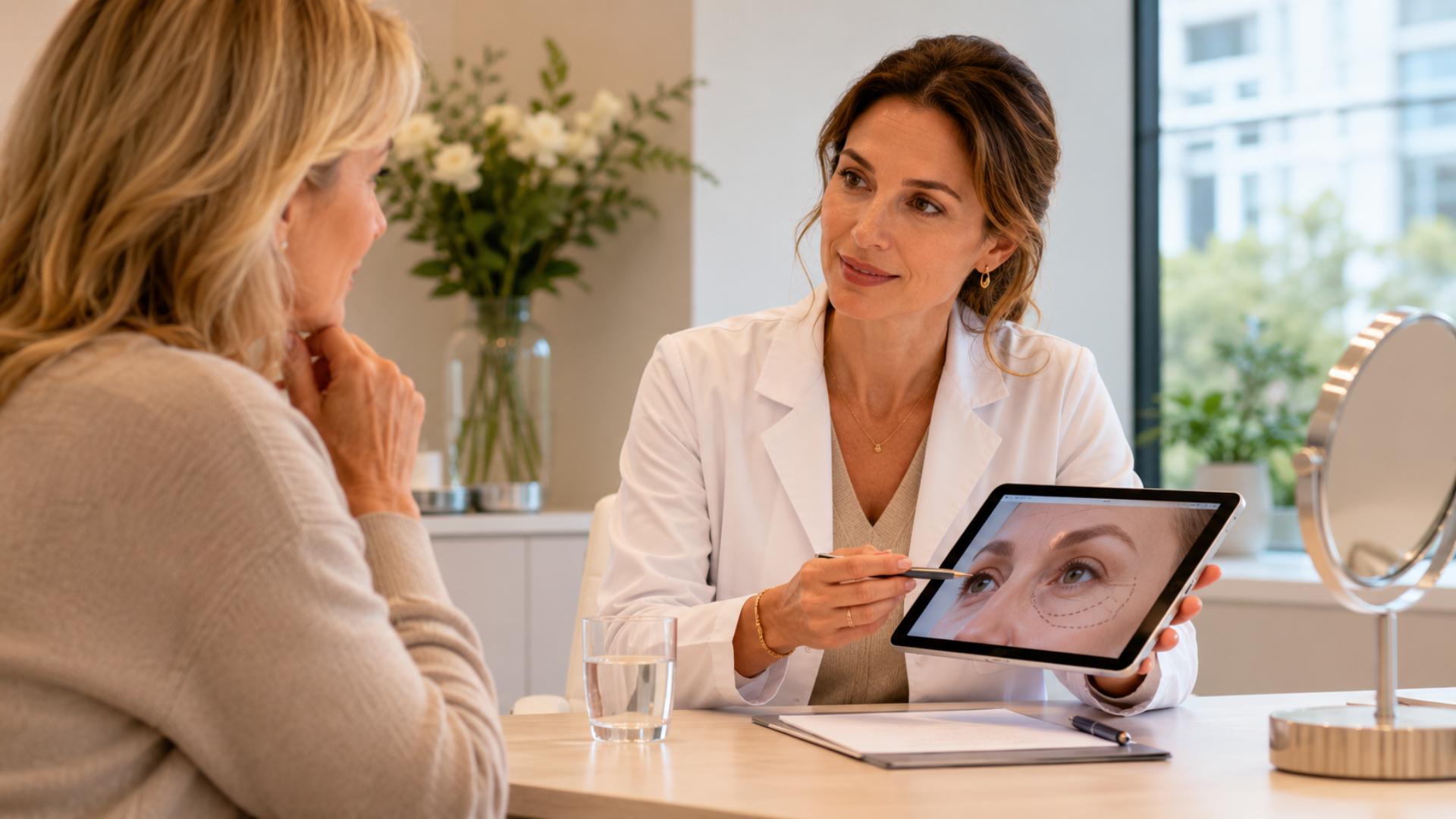
Discuss it in a personal consultation with plastic surgeon David Jairath, at our clinic for eyelid surgery in Haarlem. A first consultation can usually take place within a week.
Our protocol at Kliniek het Bolwerk
1. Extensive medical history
We ask specifically about complaints of dry, burning or watering eyes, the use of artificial tears, and any diagnoses such as Sjögren’s syndrome.
2. Assessment of the tear film
In the case of (suspected) existing dry eyes, we refer for an assessment by the ophthalmologist, so that the starting situation is clear before we plan a procedure [1,2].
3. Conservative planning
In the case of an increased risk of dry eyes, we opt, if possible, for a more conservative amount of skin and tissue removal, in order to preserve the function of the eyelid (and thereby the protection of the eye) as well as possible. So removing less skin, which allows the eyelid to close more easily. This is of course discussed with you beforehand.
4. Aftercare advice
We give practical advice for the period after the procedure, such as the use of artificial tears and eye gel, especially at night, to support the recovery time for the tear film [2].
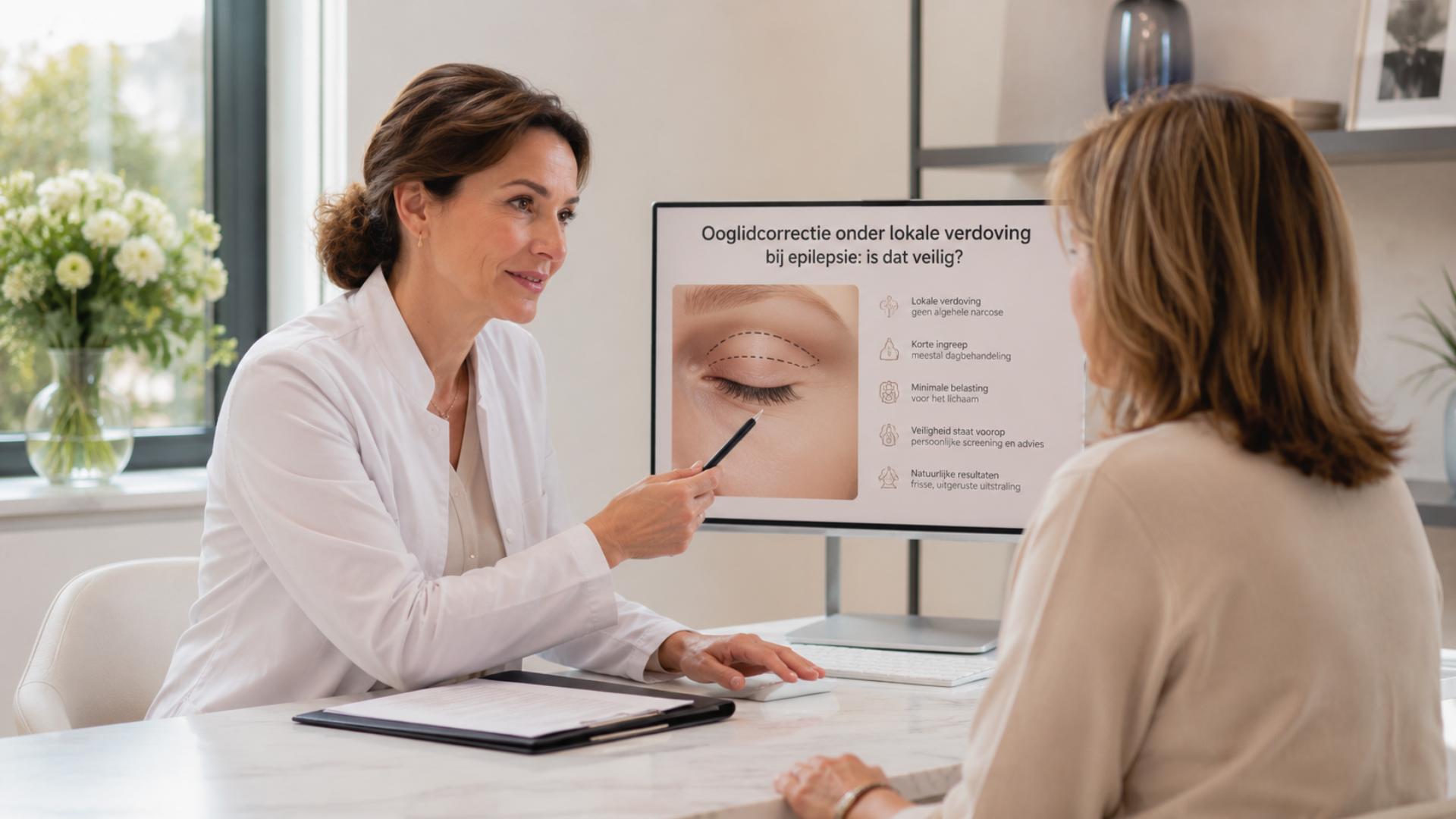
Important: dry eyes or Sjögren’s syndrome are not absolute contraindications for an eyelid correction, but do increase the risk of (temporarily) worsened complaints after the procedure. A well-mapped tear film beforehand helps to limit this risk.
When do we advise against the procedure (for the time being)?
- In the case of a severely dry eye that is not yet under treatment [1,2]
- In the case of a reduced blink reflex or existing problems with fully closing the eyelid
- If the ophthalmologist advises against the procedure at this time
Our advice
Do you regularly have dry eyes or Sjögren’s syndrome and are you considering an eyelid correction? Discuss this during a consultation at Kliniek het Bolwerk. We look together at your tear film and eyelids, and determine whether, and in what way, an eyelid correction is appropriate for your situation.
Literature references
The publications below form the medical-scientific basis of this article:
- Blepharoplasty and Dry Eyes, Treating dry eye syndrome. Cadogan Clinic, Ask the Expert. 2025. https://www.cadoganclinic.com/ask-the-expert/facial-treatments/blepharoplasty-and-dry-eyes
- Changes of Dry Eye Related Markers and Tear Inflammatory Cytokines After Upper Blepharoplasty. PMC. https://www.ncbi.nlm.nih.gov/pmc/articles/PMC8695769/
- Videographic Analysis of Blink Dynamics following Upper Eyelid Blepharoplasty and Its Association with Dry Eye. PMC. https://www.ncbi.nlm.nih.gov/pmc/articles/PMC7413808/