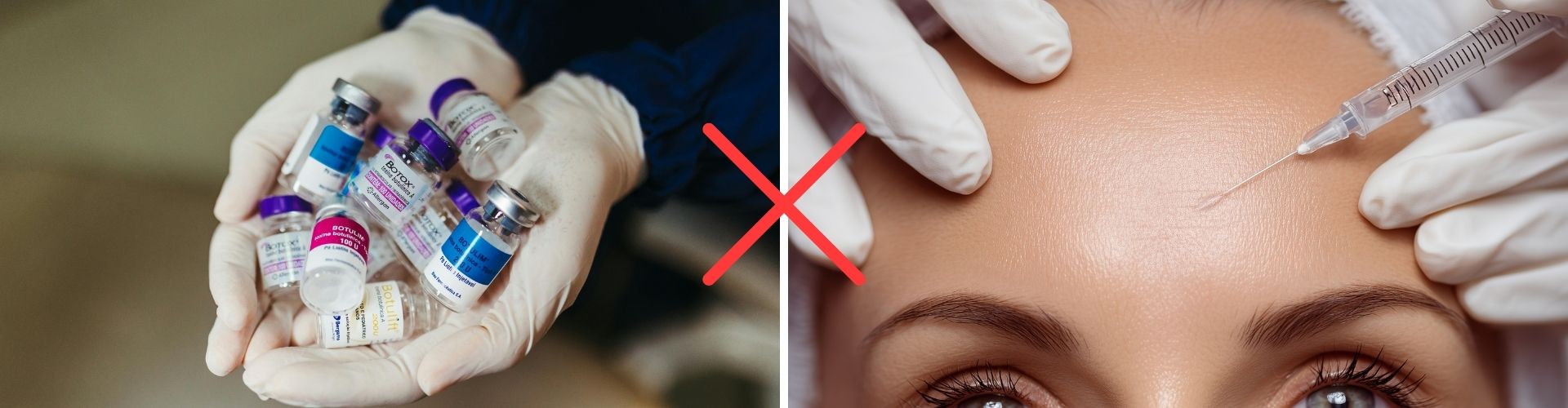

Injectables, such as botulinum toxin and hyaluronic acid-based fillers, are widely used to soften wrinkles or restore volume in the face. They are relatively small treatments that are usually carried out on an outpatient basis and require little recovery time.
Although injectables are generally safe when they are applied carefully, they remain medical treatments. As with any procedure, there are risks and possible side effects. In this blog you read which risks can occur and why expert execution is important.
What types of injectables are there?
The most commonly used injectables are:
Botulinum toxin
Used to temporarily relax muscles, for example with frown lines or crow’s feet.
Hyaluronic acid fillers
Used to add volume, improve contours or fill up deep wrinkles.
The risks differ in part per product and per treatment area.
Common, mild side effects
After a treatment with injectables, temporary side effects can occur. These usually disappear within a few days.
Possible reactions are:
- Redness at the injection site
- Swelling
- Bruise (haematoma)
- Sensitivity or slight pain
- A temporary pulling sensation
These are normal reactions of the body to the injection and no reason for concern, unless the complaints worsen.
Specific risks with botulinum toxin
Botulinum toxin works by temporarily relaxing muscles. When the product spreads to surrounding muscles, this can lead to unwanted effects, such as:
- Drooping eyelid
- Asymmetry in the face
- Difficulty lifting the eyebrow
- A changed smile pattern
These effects are usually temporary and disappear after a few weeks to months, because the effect of botulinum toxin gradually diminishes.
Specific risks with fillers
Hyaluronic acid-based fillers bring other risks with them.
Possible complications are:
- Irregularities or small bumps
- Overcorrection
- Displacement of the filler
- Prolonged swelling
A rare but serious complication is the accidental injection of filler into a blood vessel. This can lead to blockage of the blood supply, with tissue damage as a result. In very exceptional cases this can even lead to permanent damage, for example to the skin or eyesight.
Although this is very rare, it underlines the importance of treatment by an experienced doctor with knowledge of the anatomy.
Infection and allergic reactions
As with any injection, there is a small chance of:
- Infection
- Inflammatory reaction
- Allergic reaction
Strict hygiene and the use of approved products reduce this risk considerably.
When should you get in touch?
Contact a doctor when, after a treatment, you notice that:
- The pain is severe or increasing
- The skin discolours pale or purple
- The treated area feels cold
- You suddenly see less well
- Swelling or redness does not decrease
- Quick assessment is important when in doubt.
How can risks be limited?
The safety of injectables depends strongly on:
- The experience and medical background of the practitioner
- Good knowledge of the anatomy
- The use of safe, registered products
- A careful intake beforehand
During a consultation, your expectations are discussed, whether the treatment is suitable and which risks may specifically apply to you.
Finally
Injectables are popular treatments with generally a predictable and safe course. Still, they are medical procedures that involve risks, ranging from temporary swelling to rare but more serious complications.
A careful consideration and treatment by an experienced doctor are essential to limit risks. Do you have questions about a treatment with injectables or are you in doubt about a previously performed treatment? Then it is wise to have this medically assessed.