Every procedure in which the skin is opened leaves a scar. This is also the case with eyelid surgery . The good news is that these scars usually heal remarkably well and are barely visible after some time.
The eyelid skin is thin and often heals beautifully, so the scar can hide well in the natural lines of the eyelid. That makes eyelid scars the least noticeable scars of the face.
Many people worry beforehand about a visible scar. That concern is understandable, but usually unnecessary: on the eyelids in particular, scars are very hard to see after some time, because the incision blends into the natural lines of the eyelid.
In this article you can read where the scar is, how it heals, which factors play a role and what you can do yourself to help it fade as well as possible. That way you know exactly what to expect.
Where will the scar be?
With Upper eyelid surgery the incision is placed in the natural eyelid crease. As a result, the scar disappears into the crease when your eyes are open.
With your eyes closed it is visible as a thin line, which fades further and further over time. The location of the incision is chosen deliberately and carefully to make the scar as inconspicuous as possible.
With a well-healed scar, the people around you usually notice nothing of it in daily life. That is exactly why the eyelid crease is such a suitable location.
What about lower eyelid surgery?
With lower eyelid surgery the incision is often placed just below the lash line, where it blends in well. In that location a fine scar is usually barely visible.
Sometimes the surgeon works through the inside of the eyelid. Then there is no visible scar on the outside at all, because the access is on the inside of the eyelid.
Which approach suits you depends on exactly what needs to be corrected and on your starting situation. The doctor chooses the technique that gives the best and safest result in your case.
Discuss it in a personal consultation with plastic surgeon David Jairath, at our clinic for eyelid surgery in Haarlem. A first consultation can usually take place within a week.
How does the scar heal?
In the first weeks the scar may feel somewhat red and firm. That is a normal part of healing and means the body is busy recovering.
After that the scar gradually becomes lighter, flatter and softer. This maturation process happens step by step and mainly requires patience, because the skin needs time to settle.
Full maturation can take up to about a year, during which the scar becomes less and less noticeable. So do not judge the final result too early, because a lot often still improves on its own.
What can you do yourself for a good scar?
Protect the scar well from the sun, because sunlight can darken a fresh scar and that discolouration is difficult to reverse.
Follow the aftercare advice and do not rub or pull at the area while it heals. Rest, and giving the scar rest, help it heal well and flat.
Keep the skin supple and cared for as soon as your doctor allows it. Gentle care can help the scar fade, provided you take it easy and do not force it.
Which factors influence the result?
Your skin type, age and predisposition affect how a scar heals. The technique used and the quality of the aftercare are also important for the final result.
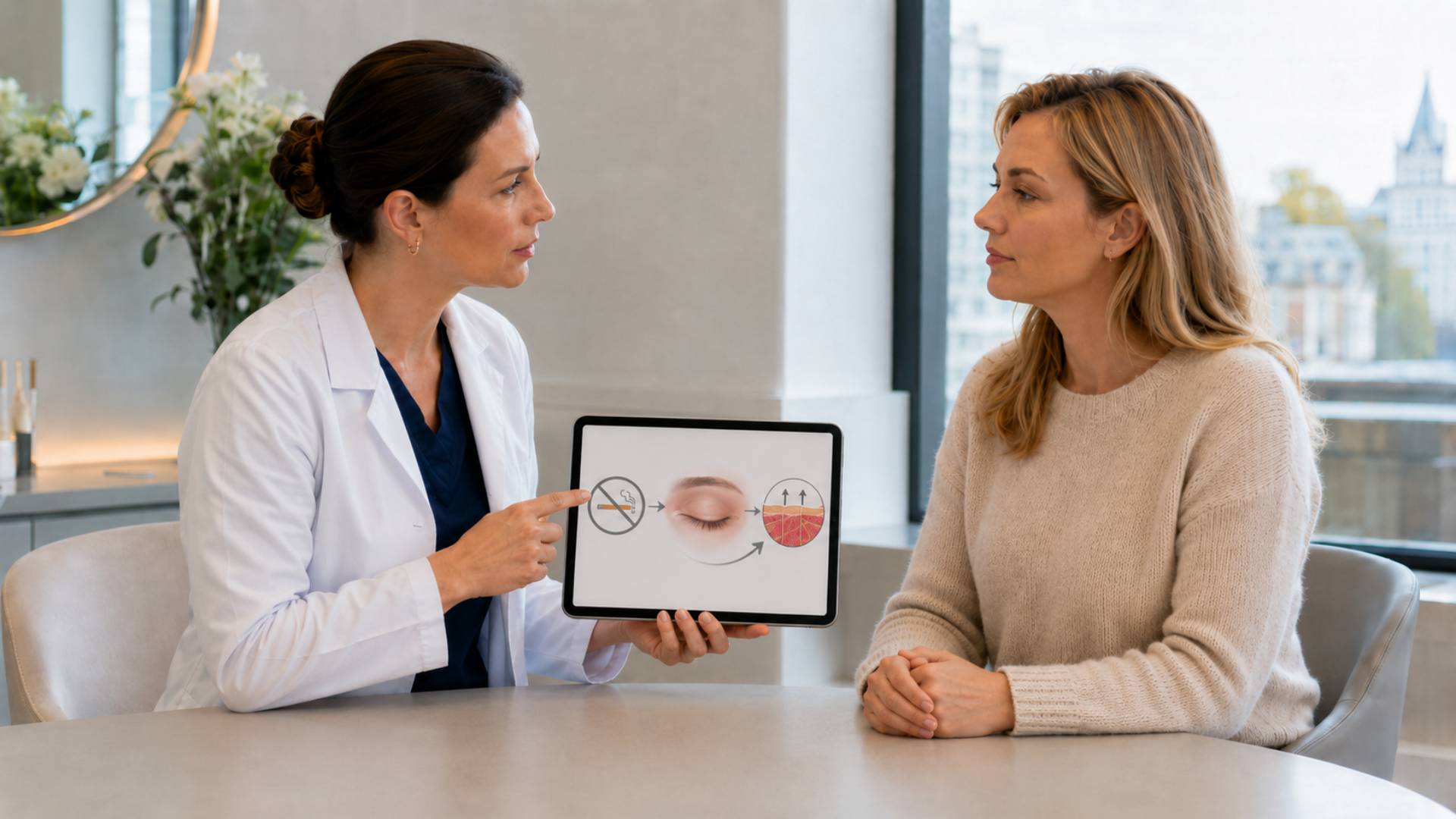
Most people heal well, but one person's skin simply reacts differently from another's. Smoking and a lot of sun can affect healing negatively and keep the scar visible for longer.
You can read more about how scars form at Scarring. With the right care and some patience, healing goes smoothly for most people.
Can a scar become thick or noticeable?
In rare cases a scar heals thicker than desired. This is called a hypertrophic scar and it is more noticeable than a normal, flat scar.
This is uncommon on the thin eyelid skin, but it cannot be completely ruled out. People who are prone to thick scars elsewhere on the body have a slightly higher chance of this.
If a noticeable scar does develop, there are treatments to improve it. So tell your doctor, so the best approach can be looked at in good time.
What if a scar still bothers you?
If a scar is still bothersome after maturing, improvement is often still possible. It is important to wait for full maturation first, because a scar can still improve a lot on its own.
Depending on the scar, a targeted Scar correction can offer a solution. Which approach makes sense depends on the nature and location of the scar.
Discuss your wishes with your doctor, so you can look at the best approach together. That way you avoid a premature or unnecessary procedure and consciously choose the right step.
How do you care for the scar in the first months?
In the first weeks, rest for the scar is the most important thing. Do not rub or pull at it and keep the area clean according to the advice you received from the clinic.
Sun protection is essential. A fresh scar quickly discolours under the influence of sunlight, and that discolouration is difficult to reverse. So protect the area well, even on cloudy days.
As soon as your doctor allows it, you can keep the skin supple with gentle care. Gentle massage can help the scar become flatter and softer, provided you do not force it.
Above all, give the scar time. Full maturation takes up to about a year, during which it becomes less and less noticeable. Patience and good care give the best result in the long term.
Scars and eyelid surgery at Kliniek het Bolwerk
Kliniek het Bolwerk specialises in eyelid surgery and works with techniques that keep the scar as inconspicuous as possible. Experience with the eye area plays a major role in this.
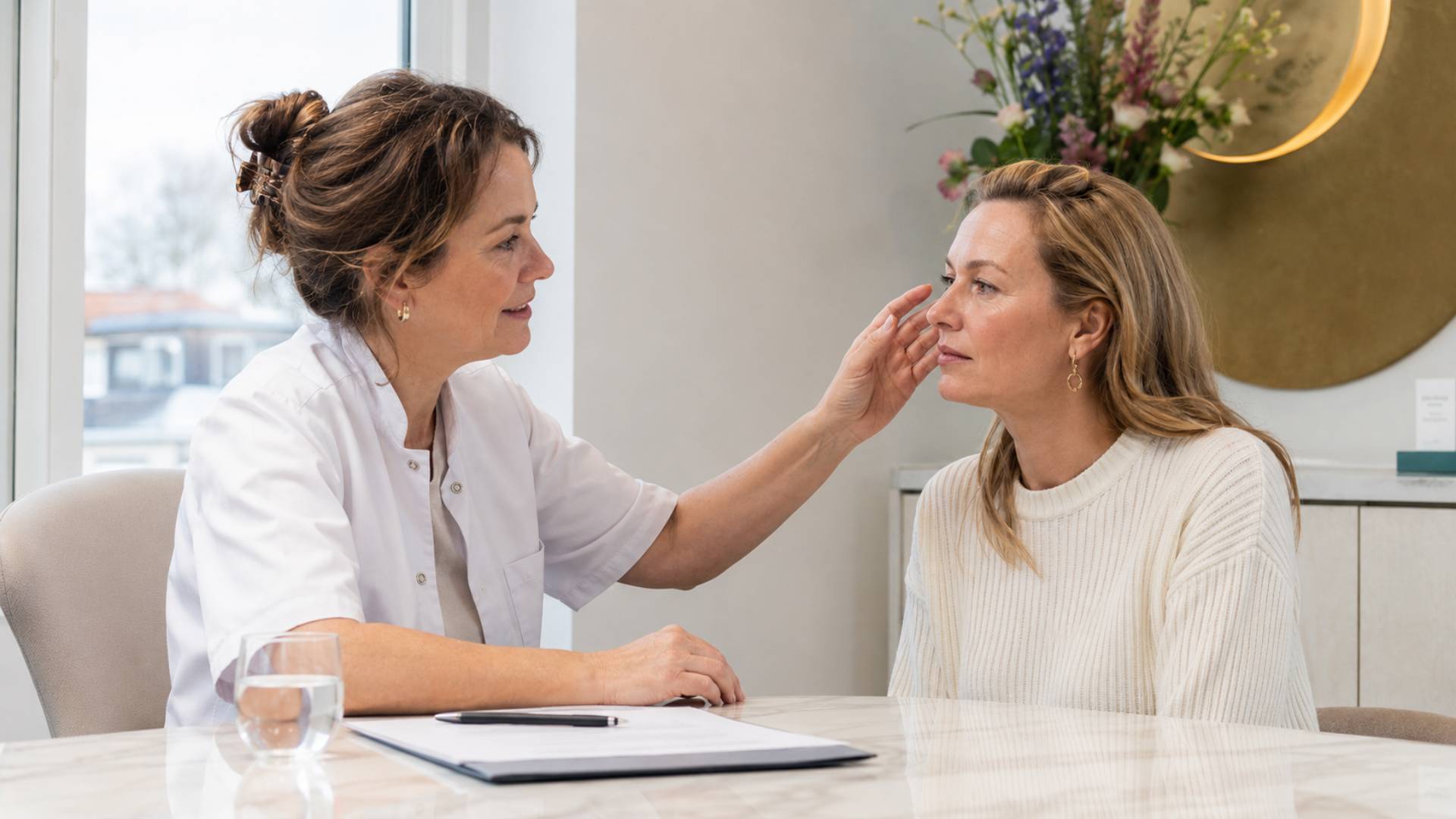
During a consultation, Dr. David Jairath explains where the scar will be and how healing goes. You also receive realistic information about what to expect.
That way you know beforehand how inconspicuous the scar is likely to be. Would you like personal advice on eyelid surgery? Book an appointment.