
As a plastic surgeon, I regularly see patients dealing with a heavy, drooping upper eyelid. Sometimes this is purely aesthetic, but in many cases it concerns a genuine medical complaint: the field of vision becomes restricted, and daily activities become more difficult. In those cases, reimbursement from the basic insurance may be possible.
I compared the 2026 policy terms of the ten largest health insurers in the Netherlands, together accounting for more than 98 percent of all insured persons, and summarised the key insights.
Medical necessity is decisive
All ten insurers apply the same principle: an upper eyelid correction is only reimbursed if there is a demonstrable functional impairment. Purely cosmetic procedures are not covered under the basic insurance by any insurer.
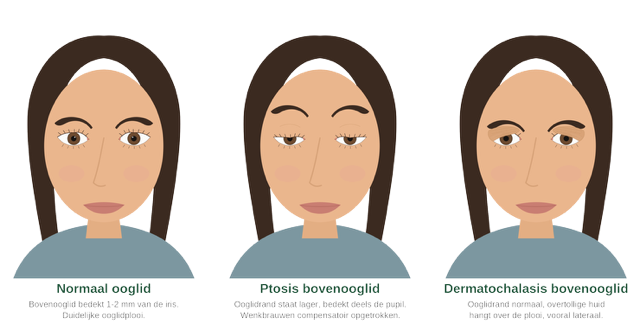
What do insurers consider a functional impairment? A significant obstruction of the field of vision due to excess skin or slackening of the upper eyelid, a congenital or chronic abnormality with functional consequences, or objectively demonstrable loss of function substantiated by a specialist.
What is the MRD1 value?
An important benchmark used in practice is the MRD1 value, Margin Reflex Distance 1. A value of 2 mm or less, or an eyelid that covers at least 50 percent of the pupil, is generally considered grounds for a medical indication. Only Zilveren Kruis explicitly mentions this threshold value in its policy terms; the other insurers apply it in practice but leave the assessment to the medical advisor.
What do you need to qualify?
The process follows the same steps with all insurers:
Step-by-step authorisation request
- Referral by the GP to an ophthalmologist or plastic surgeon
- Objective assessment by the specialist: clinical examination, photos and, if applicable, a visual field measurement (perimetry)
- An authorisation request submitted by the treating specialist to the insurer
- Assessment by the insurer's medical advisor, who makes the final decision
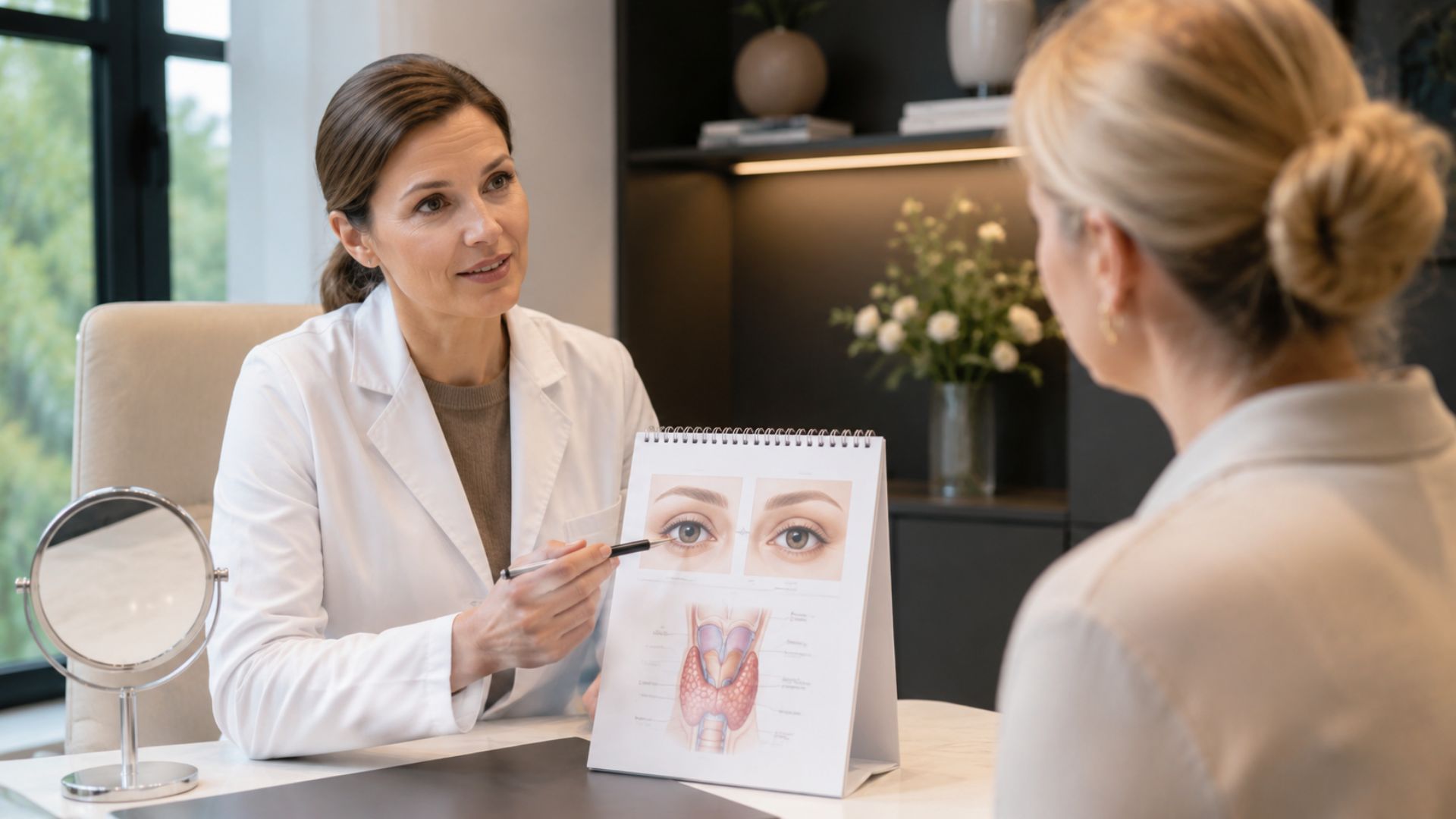
Discuss it in a personal consultation with plastic surgeon David Jairath, at our clinic for eyelid surgery in Haarlem. A first consultation can usually take place within a week.
Is the request approved? Then the procedure is reimbursed from the basic insurance, but the treatment does count towards the mandatory deductible (eigen risico). Treatment at a non-contracted care provider may result in a lower reimbursement.
And the lower eyelid correction?
A different line applies to lower eyelid correction. With all ten insurers this is excluded as standard, because it is almost always considered cosmetic. Only in very exceptional cases, with demonstrable medical complaints that cannot be resolved through conservative treatment, is there a theoretical possibility of reimbursement after a strict individual assessment.
Overview of reimbursement conditions per health insurer
2026 policy terms · Source: insurers’ own policy conditions
| Criterium | Achmea / Zilveren Kruis |
VGZ | CZ | Menzis | DSW | a.s.r. | Zorg en Zekerheid |
ONVZ | Salland | EUCARE |
|---|---|---|---|---|---|---|---|---|---|---|
| Marktaandeel 2025 | 30,0% | 22,3% | 21,5% | 10,7% | 4,4% | 3,9% | 2,8% | 2,3% | 1,1% | 0,9% |
| Cosmetische ingreep vergoed? | No | No | No | No | No | No | No | No | No | No |
| Bovenooglidcorrectie (med. indicatie)? | Mogelijk | Mogelijk | Mogelijk | Mogelijk | Mogelijk | Mogelijk | Mogelijk | Mogelijk | Mogelijk | Mogelijk |
| Onderooglidcorrectie vergoed? | Uitzonderlijk | Uitzonderlijk | Uitzonderlijk | Uitzonderlijk | Uitzonderlijk | Uitzonderlijk | Uitzonderlijk | Uitzonderlijk | Uitzonderlijk | Uitzonderlijk |
| Vereiste: functionele beperking | Yes | Yes | Yes | Yes | Yes | Yes | Yes | Yes | Yes | Yes |
| MRD1 value stated explicitly in the policy | Yes | Indirect | No | Indirect | No | No | No | No | Indirect | No |
| Verwijzing huisarts vereist | Yes | Yes | Yes | Yes | Yes | Yes | Yes | Yes | Yes | Yes |
| Voorafgaande machtiging vereist | Yes | Yes | Yes | Yes | Yes | Yes | Yes | Yes | Yes | Yes |
| Counts towards the deductible | Yes | Yes | Yes | Yes | Yes | Yes | Yes | Yes | Yes | Yes |
| Lagere vergoeding buiten contract | Yes | Yes | Yes | Yes | Yes | — | — | — | — | — |
MRD1 = Margin Reflex Distance 1 (≤ 2 mm or pupil ≥ 50% covered as an indicative threshold value). All insurers apply an individual, case-by-case assessment. Source: 2025 policy terms.
Small differences, one big principle
The differences between insurers lie not in the principle, but in the details, such as the strictness of the wording, the exact evidence requirements and the reimbursement for non-contracted care providers. In practice, some insurers apply internal guidelines with concrete measurement values that are not always literally stated in the policy terms.
What does this mean for you as a patient?
If you suffer from drooping eyelids that obstruct your vision, have this assessed by a specialist. Good documentation with photos, a visual field measurement and a clear medical report is decisive for the outcome of an authorisation request.