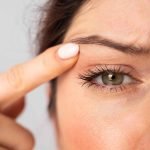

Graves' disease is an autoimmune condition of the thyroid that also affects the eyes in about 40% of patients; this is called thyroid eye disease (TED) [1]. Because TED can change the eyelids, the eye muscles and the tissue around the eye, an eyelid surgery in Graves' disease calls for extra care.
In this blog, we explain what TED involves, why timing is so important and how we deal with it at Kliniek het Bolwerk.
What is thyroid-associated eye disease (TED)?
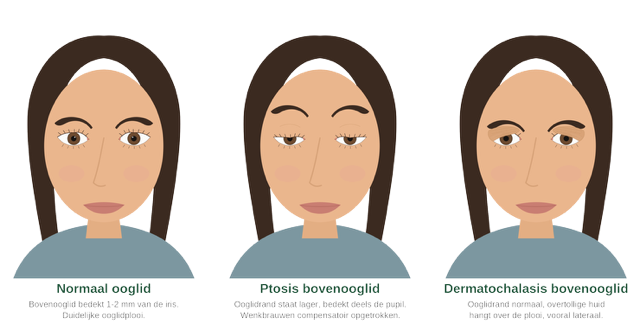
With TED, your own immune system attacks the muscles and the connective tissue around the eye. This can lead to swelling, bulging eyes (proptosis), retraction of the eyelids (the eyelids pull back), double vision and dry eyes [2,3].
TED usually proceeds in two phases: an active phase, in which the inflammation increases and complaints worsen, and a stable or ‘burnt-out’ phase, in which the inflammation has stopped but the structural changes (such as scar tissue) remain [1,4].
Why is timing so important?
An eyelid correction or other cosmetic procedure on the eyelids is advised against during the active phase of TED. A treatment during this phase can worsen the inflammation and often leads to unpredictable results. The advice is to wait until the disease has been stable for at least 6 months, and ideally 12 months, to be confirmed by an ophthalmologist or oculoplastic surgeon [4].
With rehabilitation surgery for TED, including eyelid corrections, surgery is usually only performed once the disease is in the stable (‘burnt-out’) phase [5].
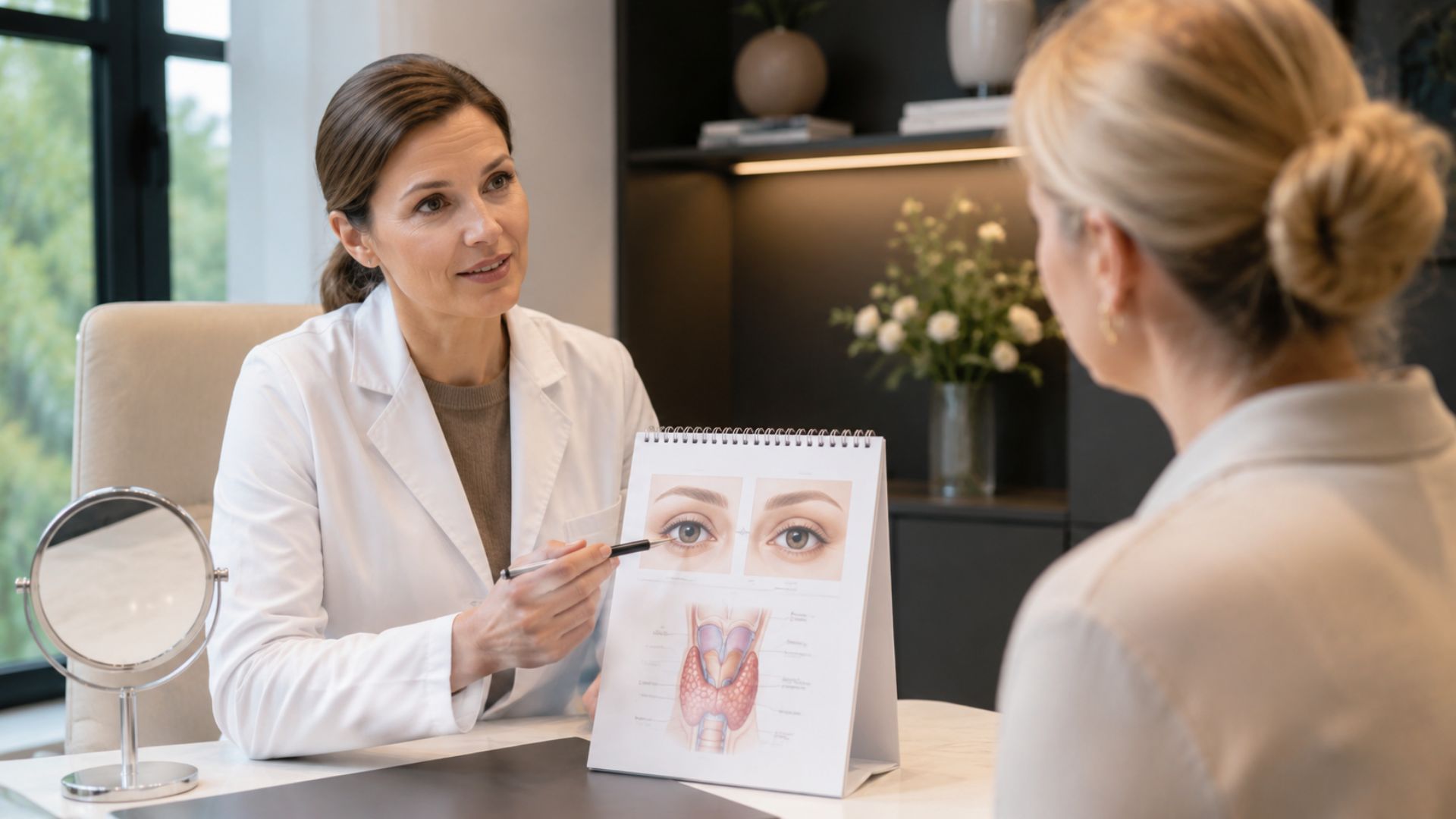
Discuss it in a personal consultation with plastic surgeon David Jairath, at our clinic for eyelid surgery in Haarlem. A first consultation can usually take place within a week.
Our protocol at Kliniek het Bolwerk
1. Extensive medical history
We ask about the diagnosis, the course of your Graves’ disease and any eye complaints such as swelling, double vision, dry eyes or a changed appearance of the eyes.
2. Assessment of the phase of the disease
We always ask about the current status: is the thyroid function stable, and is there active eye inflammation? If in doubt, we refer to an ophthalmologist or oculoplastic specialist for further assessment, possibly with imaging [4].
3. Only operating in the stable phase
We only plan an eyelid correction if the Graves’ disease and the eye complaints have been stable for at least 6 to 12 months [4,5].
4. Realistic expectations
TED can cause permanent changes in the eyelids and surrounding tissue. We discuss extensively what an eyelid correction can and cannot improve, and what the limitations are given your specific situation [3].
Important: an eyelid correction with Graves’ disease is often perfectly possible, but only when the eye disease is stable. During an active phase, the procedure is always postponed.
When do we advise against the procedure?
- During an active phase of TED, with increasing complaints such as swelling or double vision [4]
- In the case of a thyroid function that is not yet well regulated
- If there is optic neuropathy (pressure damage to the optic nerve); this first requires medical treatment by an ophthalmologist [1]
- When the ophthalmologist advises against the procedure at this time
Our advice
Do you have Graves’ disease and are you considering an eyelid correction? We are happy to discuss your situation together during a consultation. If necessary, we call in an ophthalmologist or oculoplastic specialist to assess the phase of your disease, so that we only proceed to a procedure when this is safe and responsible.
Literature references
The publications below form the medical-scientific basis of this article:
- Thyroid Eye Disease Surgery: Types and What to Expect. Healthline. 2025. https://www.healthline.com/health/thyroid-eye-disease-surgery
- Minimally invasive surgery for thyroid eye disease. PMC. https://pmc.ncbi.nlm.nih.gov/articles/PMC4730697/
- Videographic Analysis of Blink Dynamics following Upper Eyelid Blepharoplasty and Its Association with Dry Eye. PMC. https://www.ncbi.nlm.nih.gov/pmc/articles/PMC7413808/
- How Thyroid Eye Disease Affects Cosmetic Eyelid Surgery: A Guide to Expectations, Timing, and Techniques. Denver Eyelid, Denvereyelid.com. 2025. https://www.denvereyelid.com/post/how-thyroid-eye-disease-affects-cosmetic-eyelid-surgery-a-guide-to-expectations-timing-and-techni
- Surgical Management of Graves’ Disease. American Thyroid Association. https://www.thyroid.org/surgical-management-graves-disease/