A drooping upper eyelid does not always have the same cause. Sometimes the eyelid droops because of a weakened muscle, sometimes there is simply too much skin hanging over it. And in some cases the problem lies higher up, with a lowered brow that pushes the eyelid down.
The distinction matters, because each cause calls for a different solution. People who choose the wrong treatment often still have a drooping eyelid and are disappointed with the result.
In this article we explain how to recognise the differences, how a doctor determines the cause and which treatment suits which situation. That way you know better what to look out for before you make a choice.
What exactly does a drooping eyelid mean?
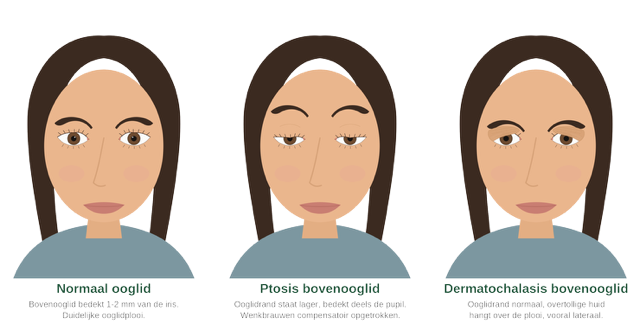
By a drooping eyelid people often mean two different things. It can be the eyelid margin itself sitting too low, or an excess of skin falling over the eyelid and making the eyes look heavy.
Both give a tired, heavy look, but the underlying cause is fundamentally different. How you experience it can also differ: one person mainly finds it cosmetically bothersome, another notices that their vision becomes limited from above.
That is why a good assessment always starts with the same question: is the problem in the muscle, in the skin or in the brow? The answer determines which treatment makes sense.
Ptosis: when the muscle is the cause
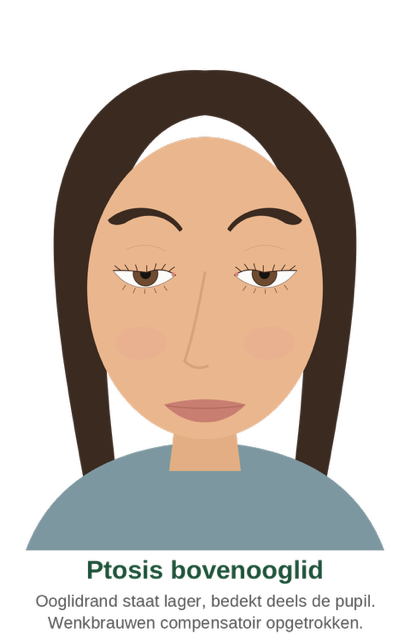
With ptosis the eyelid margin itself sits too low, because the muscle that lifts the eyelid is weakened or stretched. As a result, the margin comes closer to the pupil.
This can be congenital, but more often develops through ageing, a previous procedure or long-term contact lens wear. The muscle or its attachment then gradually loses strength.
A typical sign is that vision can become limited from above. People with ptosis often unconsciously raise their forehead to see better, which becomes tiring over time and can cause headaches.
Dermatochalasis: when there is too much skin
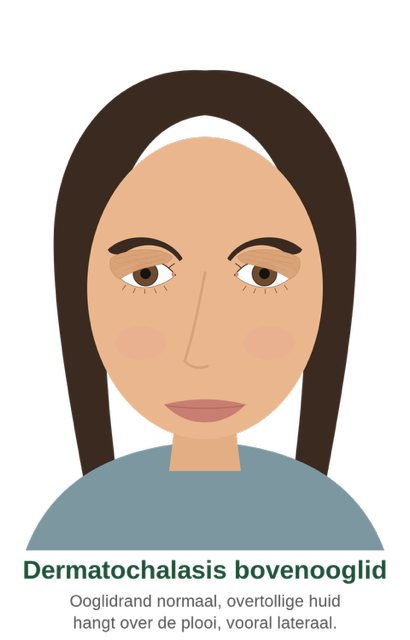
With dermatochalasis the problem is not the muscle, but an excess of skin on the upper eyelid. This skin hangs like a fold over the eyelid margin and makes the eyes look heavy and tired.
The eyelid margin itself is often still at the right height. It is mainly the excess, slack skin that shapes the picture. This is common with ageing, because the skin gradually loses its firmness.
In clear cases the skin fold can reach down to the lashes and even obstruct vision. The solution then lies in removing the excess skin, not in the muscle.
Or is it the brow?
Sometimes the eyelid seems to droop, while the real cause is a lowered brow. This is called brow ptosis and is regularly overlooked.
The brow then pushes the eyelid down, so it looks very much like a drooping eyelid. In that case the problem lies higher in the face than the eyelid itself.
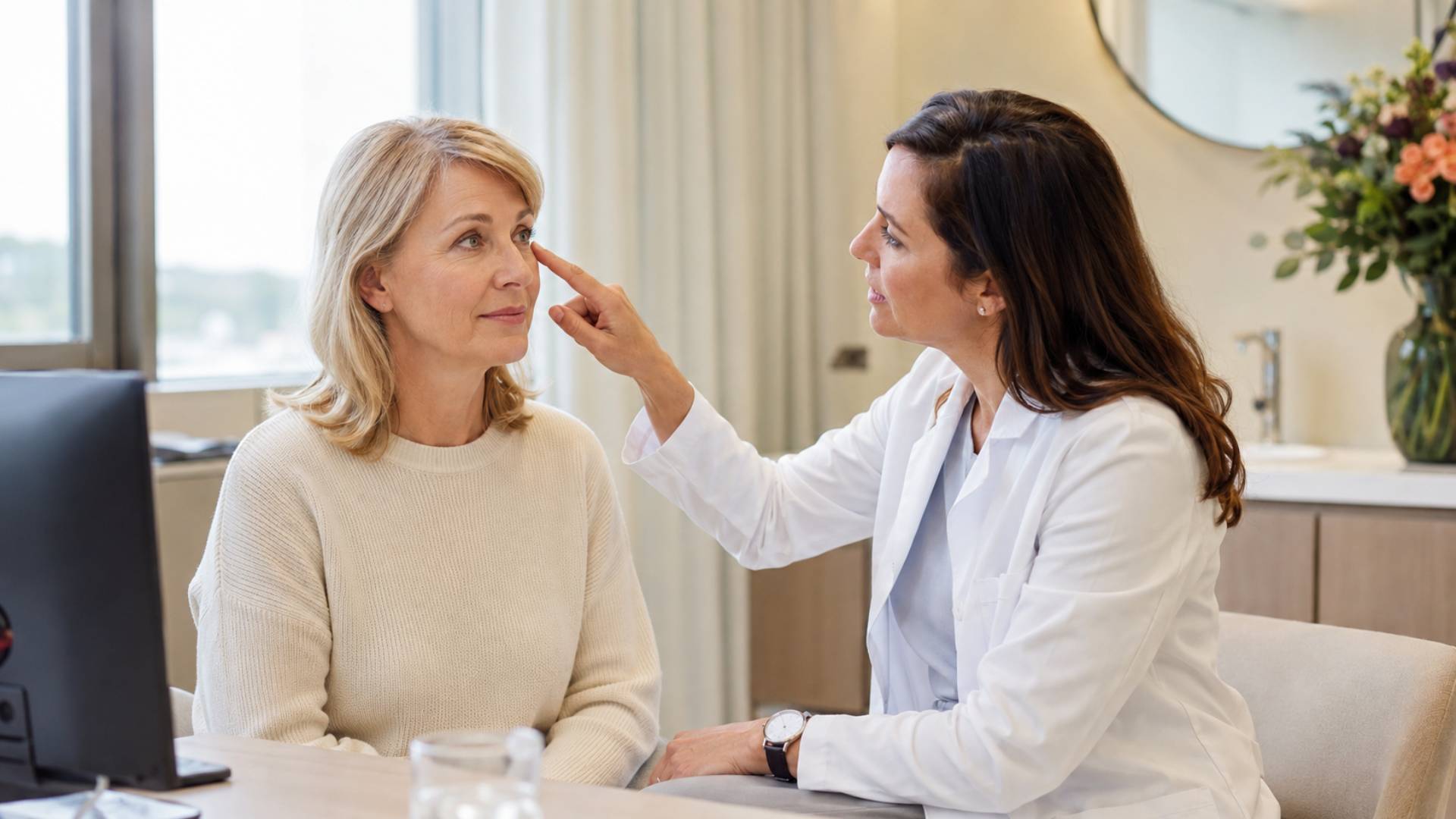
A simple test is to gently push the brow up with a finger. If the fold largely disappears, the brow plays a role and removing skin will only help to a limited extent.
How does a doctor tell the difference?
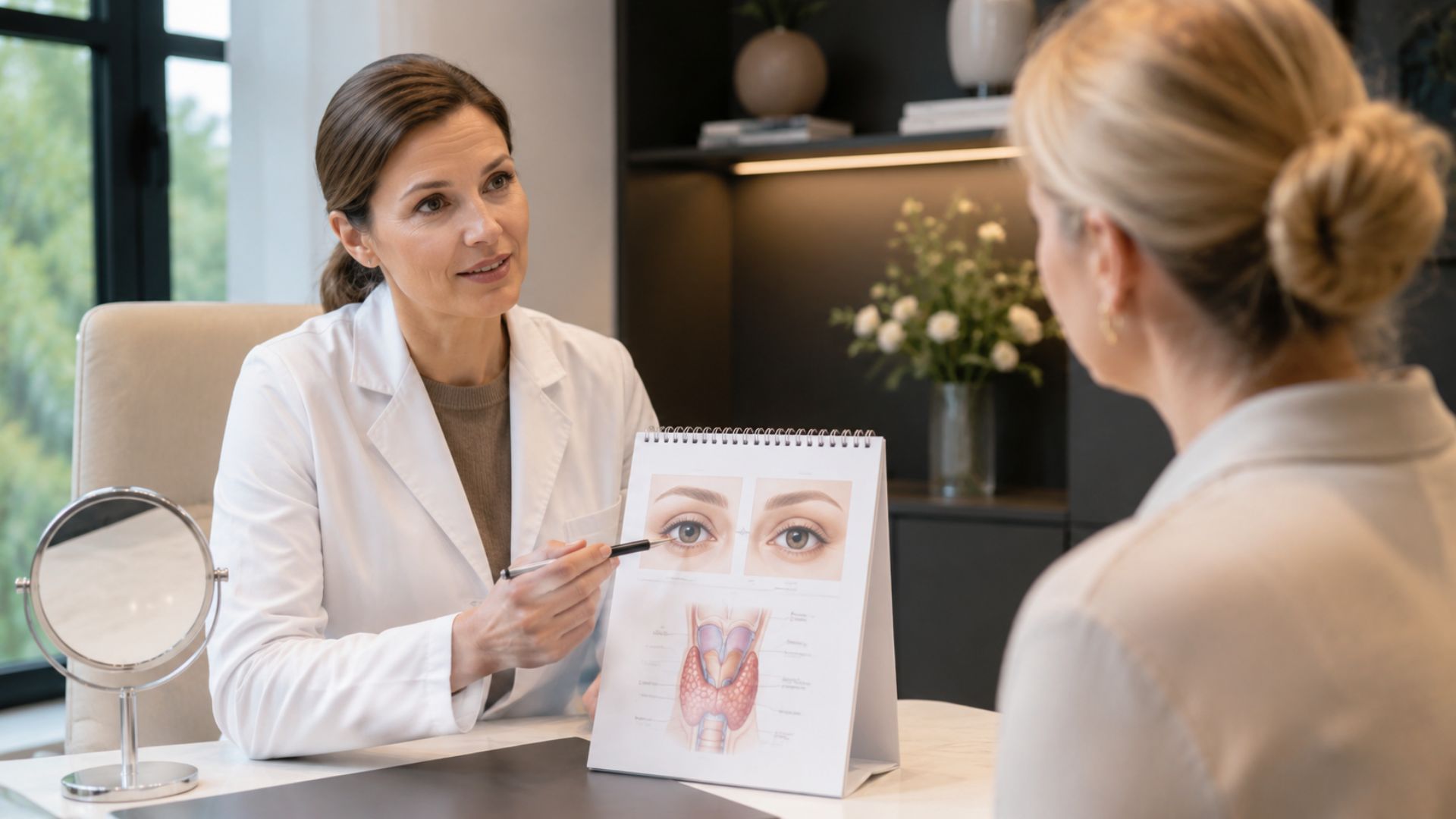
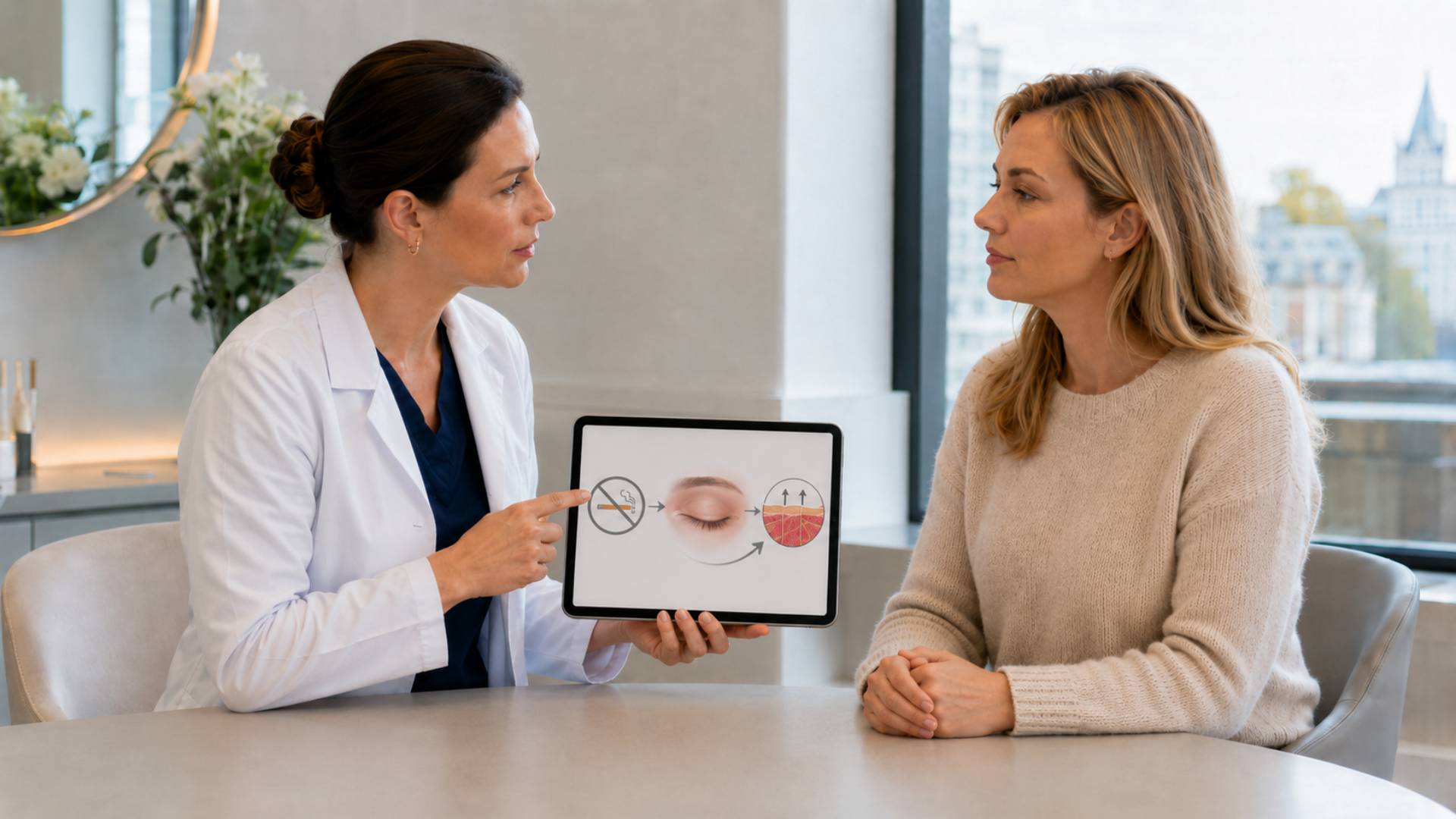
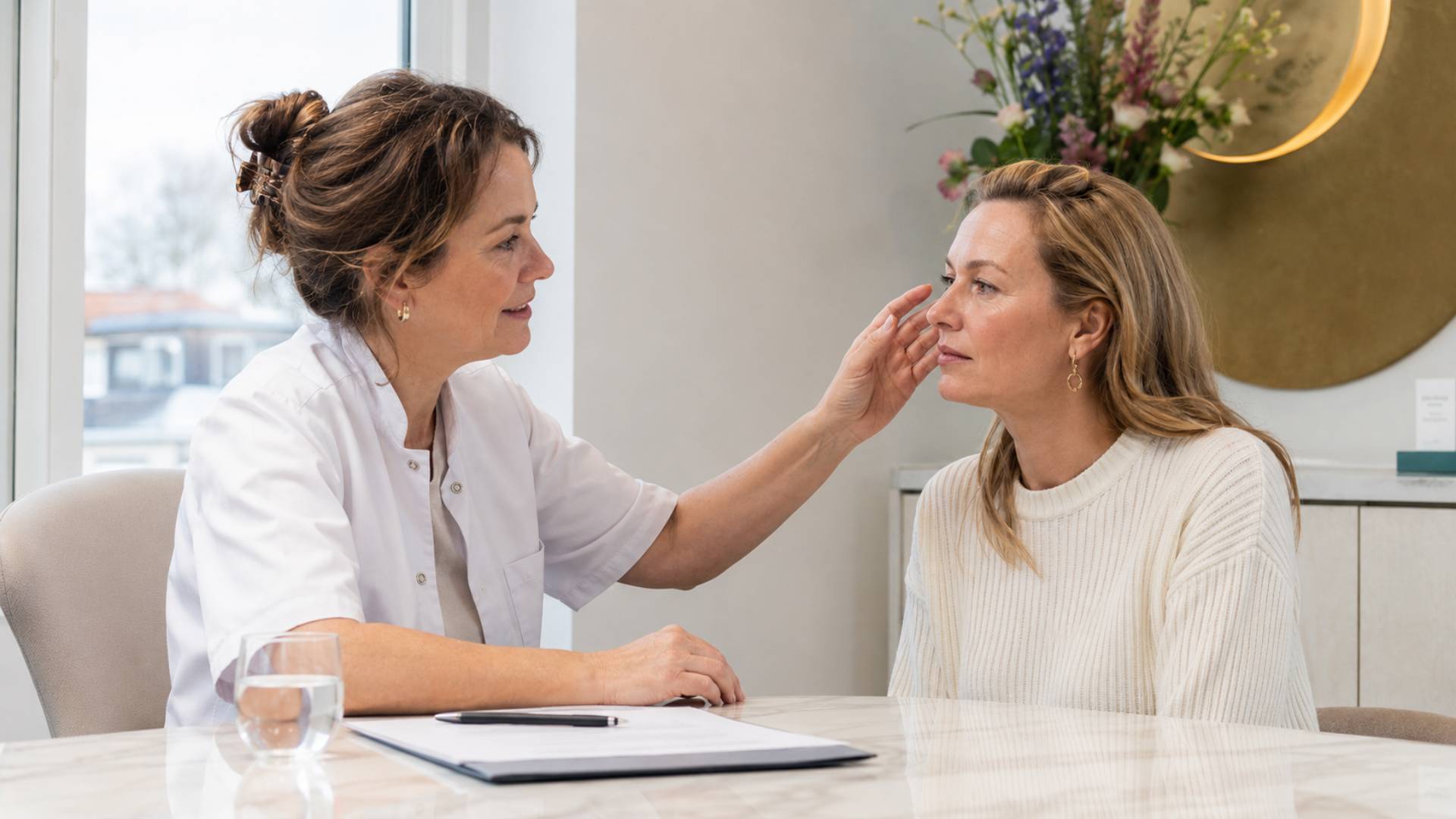
A doctor assesses the height of the eyelid margin, the amount of excess skin and the position of the brow. Together, these three factors determine exactly what is going on.
The doctor also checks whether vision is obstructed and whether both eyes look the same. A difference between left and right can point to a specific cause.
The doctor often asks you to relax, so that you do not unconsciously raise your forehead and the true picture becomes visible. Based on that, it is determined whether the cause is muscle, skin or brow, or a combination.
Which treatment suits which cause?
If the problem lies in the skin, an Upper eyelid surgery is usually the solution. The excess skin is removed, so the eyes look open and fresh again.
If the cause lies in the muscle, a targeted ptosis correction is needed to restore the eyelid height. Removing skin alone will not solve it.
With a lowered brow, a Brow lift or an eyelid lift can offer a solution. Sometimes a combination is needed, for example when there is both too much skin and a slightly weakened muscle.
Why the right diagnosis matters so much
If only skin is removed while the muscle is the cause, the eyelid stays low. The result is then disappointing, even though the procedure itself went well.
Conversely, a muscle correction makes little sense if the issue is actually an excess of skin. And a brow that is the real cause is not solved with eyelid surgery either.
An accurate diagnosis prevents disappointment and gives a result that fits the real problem. That is why the assessment beforehand is at least as important as the treatment itself.
Can a drooping eyelid go away on its own?
A drooping eyelid caused by ageing or an excess of skin unfortunately does not go away on its own. The skin and muscle do not recover spontaneously, so the condition usually remains or slowly increases.
An exception is a drooping eyelid that appears shortly after a Botox treatment. This temporary form does go away on its own once the Botox has worn off, usually within a few weeks to months.
A drooping eyelid due to tiredness or fluid can also vary temporarily. However, this does not change the underlying slackness, so the basic problem remains.
If you are unsure whether your situation is temporary or permanent, an assessment gives clarity. That way you know whether waiting makes sense or whether treatment is the only real solution.
Personal advice at Kliniek het Bolwerk
Kliniek het Bolwerk specialises in the eyes and the area around the eyes. During a consultation, Dr. David Jairath determines where the drooping eyelid comes from.
That way you get honest advice about the treatment that will really make a difference in your situation. You also hear whether it is a cosmetic or possibly medical situation.
With that information you can make a well-considered choice. Would you like to know what is possible for you? Book an appointment.